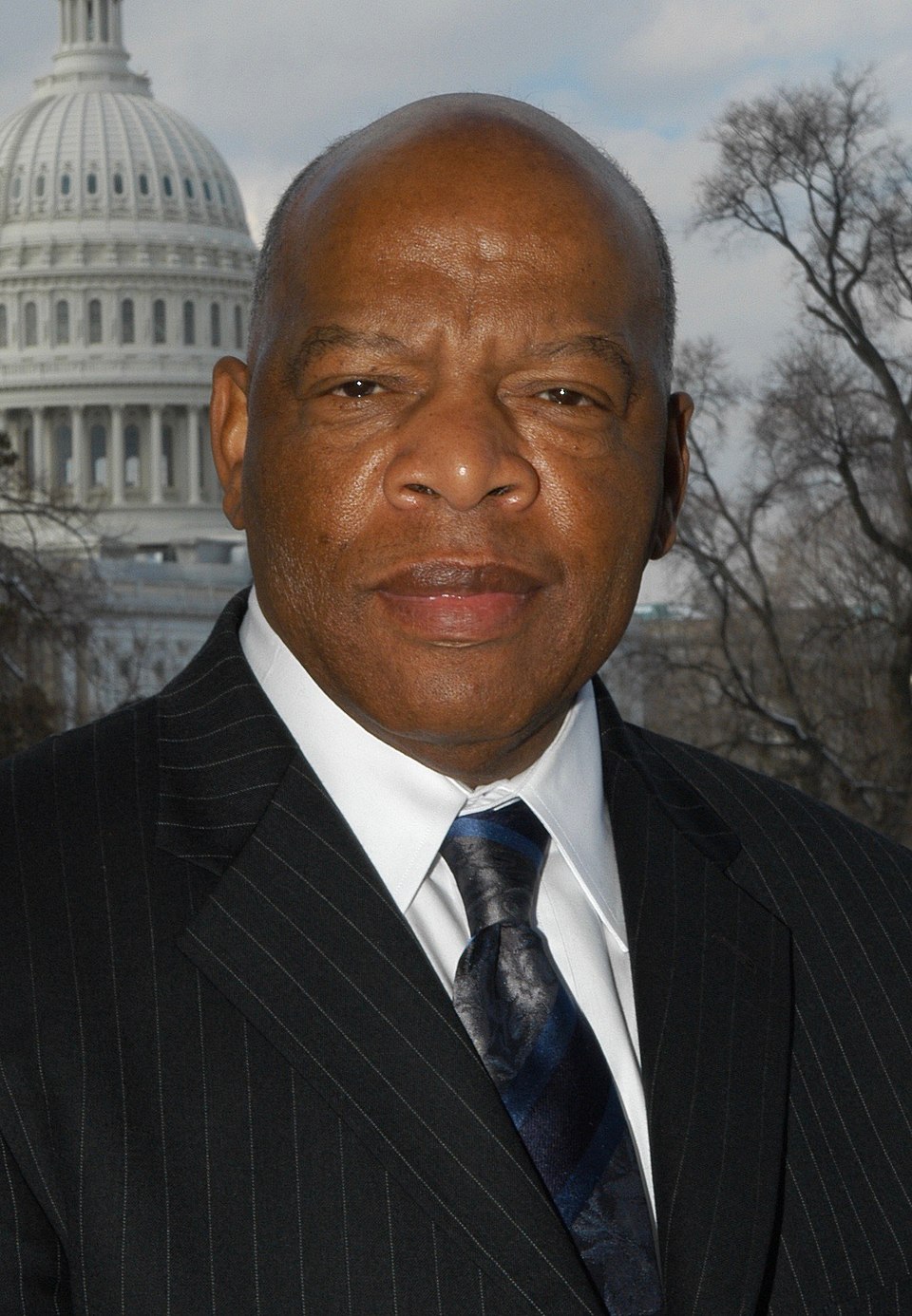
Bloody Sunday to Voting Rights: The Impact of John Lewis
Few figures in American history embody the relentless pursuit of justice and the transformative power of nonviolent action quite like John Lewis. His journey, stretching from the segregated fields of rural Alabama to the hallowed halls of Congress, is a testament to unwavering courage and a profound commitment to human dignity. A towering icon of the Civil Rights Movement and a dedicated public servant for decades, Lewis's life carved an indelible path, forever linking his name with pivotal moments like "Bloody Sunday" and the ultimate triumph of the Voting Rights Act of 1965. More than just an activist, he was an architect of the "beloved community," a vision of America built on equality and compassion.
Early Awakenings: The Making of a Freedom Fighter
Born on February 21, 1940, to sharecropper parents near Troy, Alabama, John Lewis grew up in a world defined by systemic racial injustice. His path to activism began in his youth, deeply stirred by radio broadcasts of Dr. Martin Luther King Jr.'s powerful sermons during the Montgomery Bus Boycott. These early influences ignited a spark, compelling the young Lewis to dedicate his life to a cause far greater than himself.
His courage was evident from the outset. In 1960, he joined the pioneering student movement, participating in the first mass lunch counter sit-ins in Nashville, Tennessee. These nonviolent protests, often met with hostility and violence, were critical in challenging segregation directly. Lewis quickly became a prominent voice, his commitment unwavering despite the risks. As a Freedom Rider, he endured brutal beatings at the hands of white mobs in Montgomery, yet never retaliated, holding firm to the philosophy of nonviolence that would define his activism. By 1963, at the remarkably young age of 23, his powerful voice resonated on a national stage as a keynote speaker at the historic March on Washington for Jobs and Freedom. That same year, Lewis assumed the pivotal role of chairman of the Student Nonviolent Coordinating Committee (SNCC), an organization at the forefront of the youth-led civil rights struggle.
Under Lewis's leadership, SNCC organized crucial voter registration efforts and community action programs, particularly during the arduous Mississippi Freedom Summer of 1964. These initiatives were not merely about registering voters; they were about empowering communities, challenging institutionalized racism, and laying the groundwork for a more equitable future. His early experiences forged him into a leader who understood the profound power of peaceful protest and the moral imperative to confront injustice head-on.
Bloody Sunday: A Turning Point for Voting Rights
The quest for voting rights reached a critical juncture on March 7, 1965. John Lewis, alongside fellow movement leader Hosea Williams, led over 600 peaceful protestors across the Edmund Pettus Bridge in Selma, Alabama. Their destination: the state capital of Montgomery, a march intended to spotlight the severe disenfranchisement of African American voters. What unfolded on that fateful day would be etched into the annals of history as "Bloody Sunday."
As the marchers reached the crest of the bridge, they were met with a horrific onslaught by Alabama state troopers and local law enforcement. The peaceful demonstrators, including Lewis, were brutally attacked with billy clubs and tear gas, a scene of unprovoked violence captured by news cameras and broadcast into homes across America. Lewis himself suffered a fractured skull, yet his resolve, and that of the movement, remained unbroken.
The graphic images of "Bloody Sunday" served as a shocking wake-up call for the nation. The raw injustice and brutality of the segregated South were laid bare for all to see, galvanizing public opinion and creating an undeniable moral urgency for federal intervention. This pivotal event directly paved the way for the passage of the landmark Voting Rights Act of 1965, signed into law just months later. The Act outlawed discriminatory voting practices, fundamentally transforming American democracy and securing the right to vote for millions of African Americans. Lewis's willingness to endure violence for justice, his literal shedding of blood on that bridge, underscored the sacrifices made to achieve this vital legislation. To delve deeper into his unwavering commitment to these principles, explore John Lewis's Unwavering Fight for Human Rights and Justice.
From the Streets to the Halls of Congress: A New Battleground
While "Bloody Sunday" marked a profound victory, Lewis's work was far from over. Despite further attacks, injuries, and more than 40 arrests throughout his early activism, he steadfastly adhered to the philosophy of nonviolence and continued to champion the movement. After leaving SNCC in 1966, Lewis transitioned his efforts into new avenues for social change. He served as associate director of the Field Foundation, which provided crucial support for civil rights initiatives, and participated in voter registration programs with the Southern Regional Council, an organization dedicated to promoting racial equality.
In November 1986, John Lewis embarked on a new chapter of service, successfully campaigning to represent Georgia’s 5th Congressional District in the U.S. House of Representatives. He would hold this seat until his passing in 2020, becoming one of the most respected and senior members of Congress. His transition from street activist to legislator demonstrated a profound understanding that while direct action could force change, legislative action could institutionalize it.
During his decades in Congress, Lewis held significant leadership roles, including senior chief deputy whip for the Democratic Party. He was a prominent member of the House Ways & Means Committee and served as chairman of its Oversight Subcommittee, where he continued to fight for economic justice and civil liberties through policy. His legislative efforts focused on healthcare, education, poverty, and, of course, the protection and expansion of voting rights. Lewis's reputation for moral clarity and unwavering integrity earned him numerous accolades, culminating in the highest civilian honor, the Medal of Freedom, bestowed upon him by President Barack Obama in 2015.
The Enduring Legacy of John Lewis: Good Trouble and Beyond
John Lewis often encouraged people to "get in good trouble, necessary trouble," a mantra that perfectly encapsulated his life's work. His legacy is not just a historical account of past struggles but a living inspiration for ongoing movements for justice and equality. He taught us that while the fight for civil rights is long, persistence, moral courage, and an unshakeable belief in the "beloved community" can bend the arc of the moral universe towards justice.
Practical takeaways from Lewis's life include:
- The Power of Persistence: Despite setbacks and violence, Lewis never gave up. His journey reminds us that significant change often requires sustained, long-term commitment.
- Moral Courage: He willingly put his body on the line for his beliefs, demonstrating that true leadership often demands personal sacrifice and a willingness to stand for what is right, even when it's unpopular or dangerous.
- The Importance of the Vote: Having fought so fiercely for voting rights, Lewis consistently emphasized the sanctity of the ballot box and the importance of civic engagement as foundational to democracy.
- Nonviolence as a Strategy: His steadfast adherence to nonviolent resistance proved its efficacy as a powerful tool for social change, capable of exposing injustice and winning over public opinion.
- Building the "Beloved Community": Beyond simply ending segregation, Lewis envisioned a society where all people could live together in peace and harmony, a goal that continues to inspire.
His passing on July 17, 2020, after a six-month battle with pancreatic cancer, left a void, but his spirit and teachings continue to resonate. He implored us to "keep the faith" and to remain optimistic in the face of adversity. Congressman Lewis's life reminds us that ordinary individuals possess extraordinary power to change the world. His fight for racial equality and his profound dedication to human rights truly helped spread the message that "what happens to one of us affects all of us." For a deeper dive into his comprehensive contributions, consider reading John Lewis: A Legacy of Courage, Civil Rights, and Service.
From the brutality of "Bloody Sunday" to the legislative triumphs in Congress, John Lewis embodied the enduring struggle for equality and justice. His impact on voting rights, civil liberties, and the very conscience of America is immeasurable. He was more than a congressman; he was a moral compass, a freedom fighter whose life serves as a timeless blueprint for how to create a more just and equitable world. His voice, his courage, and his call to make "good trouble" will forever echo, urging future generations to continue the unfinished work of building that beloved community.