John Lewis's Unwavering Fight for Human Rights and Justice
In the annals of American history, few names resonate with the unwavering commitment to human rights and justice quite like that of John Lewis. An authentic American hero, a civil rights icon, and a revered member of the U.S. House of Representatives, John Lewis dedicated over six decades of his life to dismantling injustice and building a more equitable society. He was not merely a participant in the Civil Rights Movement; he was a courageous pioneer, a strategic leader, and an enduring voice for the marginalized, tirelessly pursuing what he called the "beloved community." His journey, marked by relentless struggle and profound sacrifice, ultimately transformed the nation for the better, leaving an indelible mark on its conscience and its laws.
The Roots of a Freedom Fighter: Early Life and Inspiration
Born on February 21, 1940, to sharecroppers near Troy, Alabama, John Lewis grew up in the deeply segregated South. This environment, steeped in systemic racial discrimination, fueled his nascent understanding of injustice. His awakening to the call for change was dramatically accelerated by radio broadcasts from the Reverend Martin Luther King Jr., particularly during the Montgomery Bus Boycott. These powerful messages stirred in young John Lewis a profound sense of purpose, compelling him to become an active participant in the burgeoning movement for civil rights.
His early life experiences, though challenging, provided a crucible for his unshakeable moral compass. Witnessing firsthand the indignities and cruelties of segregation, he understood that freedom was not merely an abstract concept but a fundamental human right that needed to be fought for, often at great personal risk. This early inspiration would set him on a path of activism that would define his entire life, preparing him for the monumental challenges and pivotal moments that lay ahead.
On the Frontlines: Defining Moments in the Civil Rights Movement
John Lewis quickly moved from inspiration to action, becoming a central figure in the most impactful direct actions of the Civil Rights Movement. His bravery and commitment to nonviolence in the face of extreme brutality served as a beacon for many.
The Power of Nonviolence: Sit-ins and Freedom Rides
In 1960, John Lewis demonstrated his conviction in the power of nonviolent resistance by participating in the pioneering mass lunch counter sit-ins in Nashville, Tennessee. These protests, which aimed to desegregate public accommodations, required immense discipline and courage from participants who endured verbal abuse, physical assault, and arrest without retaliation. His involvement here cemented his belief in the strategic effectiveness of peaceful protest.
His commitment was further tested during the Freedom Rides, a series of bus trips through the American South in 1961, designed to challenge the non-enforcement of U.S. Supreme Court decisions that ruled segregated public buses unconstitutional. In Montgomery, Alabama, John Lewis and his fellow Freedom Riders were met by a vicious white mob. He was severely beaten, sustaining injuries that would have deterred many, yet he emerged more resolute in his mission. These experiences were not merely acts of defiance; they were strategic maneuvers designed to expose the brutality of segregation and garner national attention, forcing the country to confront its deeply ingrained prejudices.
A Voice for Change: March on Washington and SNCC Leadership
At the astonishing age of 23, John Lewis stood as one of the "Big Six" leaders of the Civil Rights Movement and delivered a powerful keynote address at the historic March on Washington for Jobs and Freedom in 1963. His speech, originally more confrontational, was revised at the urging of other leaders, yet it retained its fiery call for immediate and comprehensive civil rights legislation. That same year, his leadership capabilities were recognized when he became the chairman of the Student Nonviolent Coordinating Committee (SNCC), one of the most dynamic and impactful organizations of the era.
Under his leadership, SNCC organized pivotal voter registration efforts and community action programs, most notably during the arduous Mississippi Freedom Summer of 1964. This initiative, designed to register African American voters in one of the nation's most resistant states, highlighted the pervasive disenfranchisement and violence faced by Black citizens. John Lewis guided these courageous efforts, understanding that the ballot box was a crucial pathway to achieving true equality and justice.
Bloody Sunday and the March for Voting Rights
Perhaps the most defining moment of his early activism occurred on March 7, 1965, a day forever etched into history as "Bloody Sunday." John Lewis, alongside fellow movement leader Hosea Williams, led over 600 peaceful protestors across the Edmund Pettus Bridge in Selma, Alabama. Their destination was the state capital of Montgomery, a march for fundamental voting rights.
However, as they crossed the bridge, they were brutally attacked by Alabama state troopers with billy clubs and tear gas. John Lewis suffered a fractured skull. The shocking images of this violent confrontation, broadcast across the nation, undeniably exposed the horrific injustice and brutality of the segregated South. This stark revelation galvanized public opinion and played a critical role in accelerating the passage of the landmark Voting Rights Act of 1965, signed into law just months later. For a deeper dive into this pivotal event, explore Bloody Sunday to Voting Rights: The Impact of John Lewis.
From Activism to Legislation: A Lifetime of Service
Despite enduring more than 40 arrests, numerous injuries, and persistent threats, John Lewis never wavered from his philosophy of nonviolence or his commitment to the movement. His work for civil rights did not end with the passage of monumental legislation; it merely evolved.
Continued Advocacy Beyond SNCC
After leaving SNCC in 1966, Lewis continued his tireless work for social change. He served as associate director of the Field Foundation, an organization that provided crucial support to civil rights initiatives. He also participated in vital voter registration programs with the Southern Regional Council, an organization dedicated to promoting racial equality. These roles allowed him to continue his advocacy behind the scenes, ensuring that the momentum gained during the height of the movement translated into sustained, systemic change. His journey illustrates a critical lesson: the fight for justice often requires a multi-pronged approach, combining visible protest with strategic institutional engagement.
The Statesman: Representing Georgia in Congress
In November 1986, John Lewis embarked on a new chapter of public service, elected as a U.S. Representative for Georgia’s 5th Congressional District. He served in this capacity until his passing in 2020, bringing his profound moral authority and decades of activist experience directly into the legislative chambers. In Congress, he became a senior chief deputy whip for the Democratic Party, a respected member of the powerful House Ways & Means Committee, and chairman of its Oversight Subcommittee.
In this role, John Lewis continued his fight for human rights, civil liberties, and economic justice, championing legislation aimed at protecting voting rights, advocating for healthcare, and addressing poverty. He understood that true justice required not only changing hearts but also changing laws. His presence in Congress served as a constant reminder of the struggles and sacrifices made for civil rights, influencing policy debates with a perspective forged in the crucible of direct action. His career exemplifies how grassroots activism can transition into effective political leadership, proving that the commitment to "good trouble" can indeed permeate every level of government.
The Enduring Legacy of John Lewis: Good Trouble and the Beloved Community
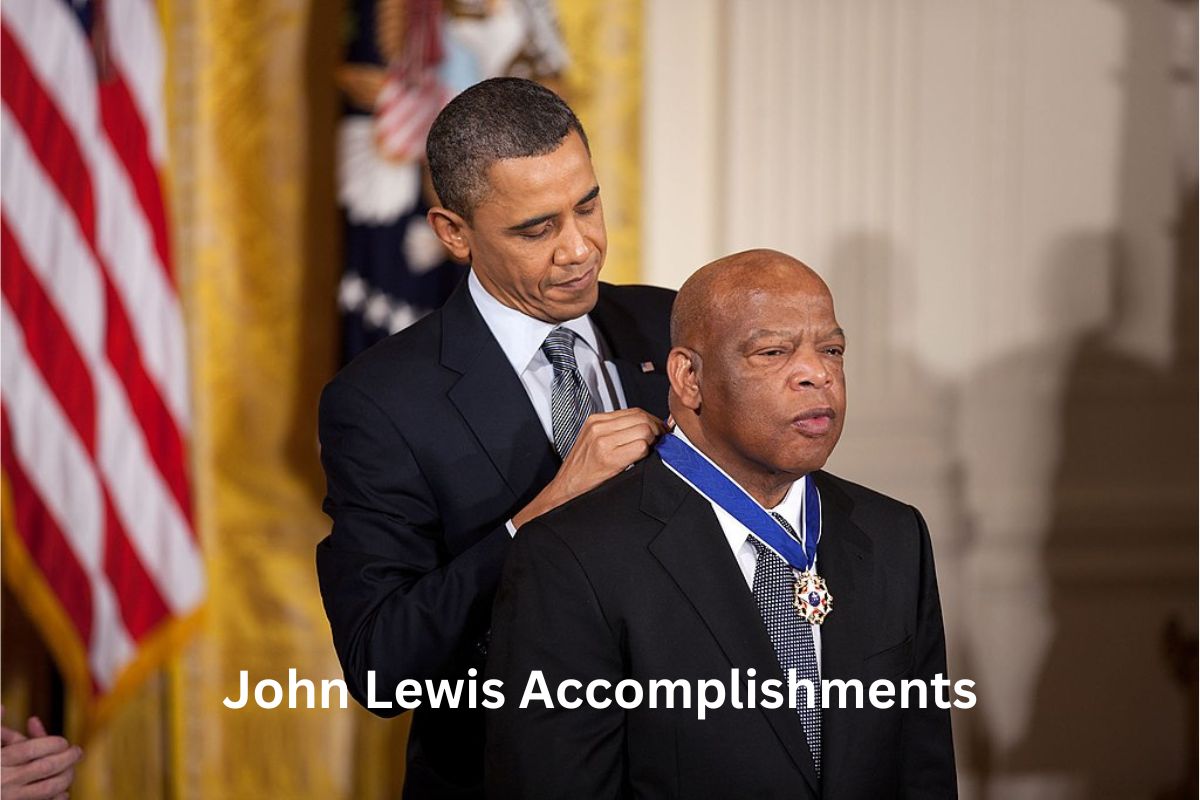
John Lewis received countless accolades throughout his life, both nationally and internationally, culminating in the highest civilian honor: the Presidential Medal of Freedom, bestowed upon him by President Barack Obama in 2015. These honors merely underscored what millions already knew: he was a moral compass for the nation.
His enduring legacy is encapsulated in his famous exhortation to "make good trouble, necessary trouble," a philosophy that encouraged responsible, nonviolent defiance against unjust systems. He taught us that true patriotism involves holding our country accountable to its highest ideals, even when it’s uncomfortable. His vision of the "beloved community" was not a utopian dream but a tangible goal—a society reconciled with itself, where justice rolls down like waters and righteousness like a mighty stream, where every individual is treated with dignity and respect.
John Lewis's life serves as an indispensable blueprint for anyone seeking to create positive change. He demonstrated that courage, compassion, and an unwavering commitment to nonviolence can overcome even the most formidable obstacles. His message to "keep the faith" resonates today, urging current and future generations to continue the struggle for a more perfect union. We are all called to find our own ways to make "good trouble" in our communities and beyond, advocating for those who are marginalized and striving for a world where justice is not merely an ideal but a lived reality for all. To explore more about his profound impact, read John Lewis: A Legacy of Courage, Civil Rights, and Service.
John Lewis passed away on July 17, 2020, after a battle with pancreatic cancer, at the age of 80. Yet, his spirit, his teachings, and his extraordinary example continue to inspire millions. His unwavering fight for human rights and justice, his profound belief in the power of love and nonviolence, and his relentless pursuit of the "beloved community" ensure that his legacy will continue to guide and inspire us for generations to come. He saw something and did something that truly changed the world for the better, leaving us indebted to his courage and vision.